To Improve English Skills at an International School in Malaysia:
Improving English Proficiency
5 Things You Can Do at Home
In Part 1, we identified common reasons why children's English skills tend to plateau when relocating to Malaysia for education — including the Japanese community environment, the proportion of Japanese spoken at home, "passive understanding" of English, and exposure to Manglish. So what are families whose children are actually improving their English doing differently? This article introduces concrete steps you can start taking today.
- ✓A home environment that supports English growth
- ✓Ideas for increasing English input at home
- ✓Ways to increase English output
- ✓Key points to check at international school meetings
- ✓How to leverage the Malaysian environment for English acquisition
Whythe "Home Environment"Makes a Difference in English Proficiency
At international schools in Malaysia, classroom instruction alone provides a certain level of English exposure. However, in practice, there are significant differences in the amount of English contact depending on: what language is spoken at home, who children spend time with after school, what videos and books they are exposed to, and whether they use English outside of school.
Especially for families who have relocated for educational purposes, how children spend their time outside of school is extremely important.
To Improve English Skills:5 Things You Can Do at Home
One area where significant differences in English acquisition tend to emerge is the "amount of English input at home." In particular, Japanese content — such as Japanese YouTube, Netflix, gaming commentary, and Japanese social media — is now easily accessible. While maintaining Japanese is of course important, many families who want to improve their children's English are mindful of increasing the amount of English exposure at home.
- English audio + English subtitles
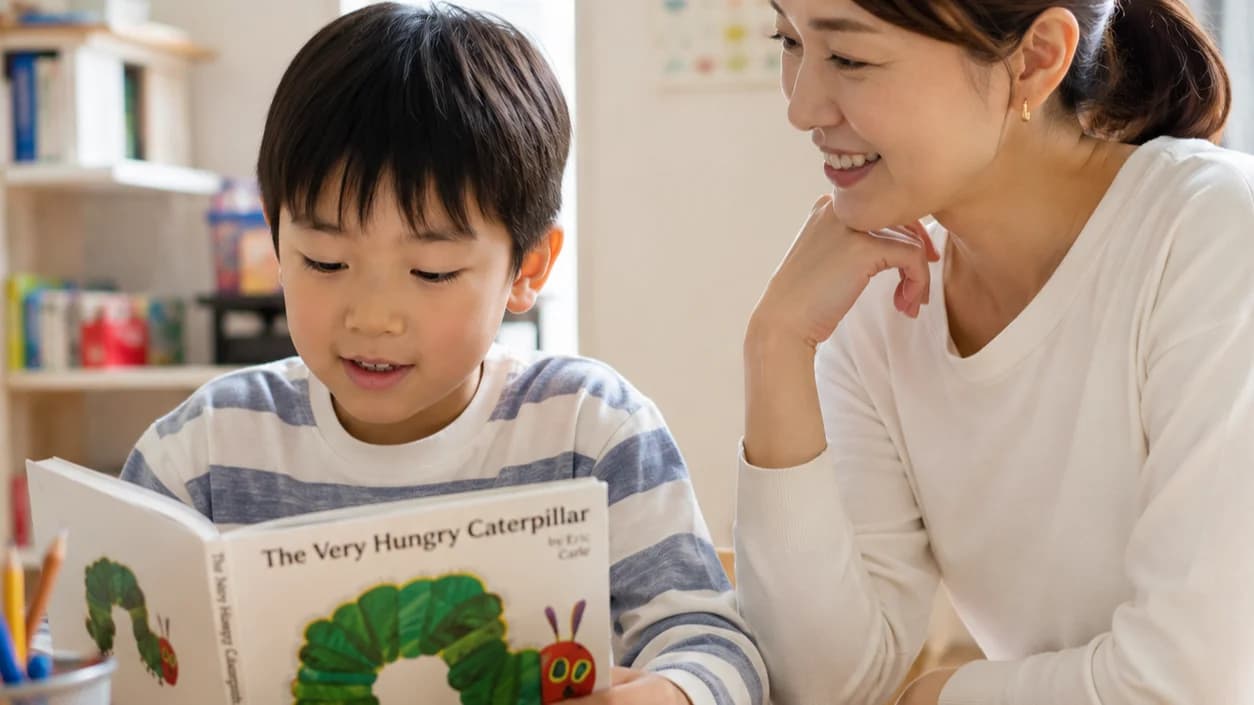
- Read-alouds from English books
- English podcasts
- English animated shows
Incorporating these into daily life makes it easier to naturally increase the amount of English input. In addition, showing children that parents themselves are learning English can sometimes have a positive effect on the child's motivation.
Increasing the time children use English outside of school is also important. Malaysia in particular offers a relatively wide variety of multicultural extracurricular activities.
- Local sports
- Multicultural art classes
- Coding classes
- Tennis / Soccer
- Dance / Music lessons
Participating in extracurricular activities conducted in English makes it easier to create English output opportunities outside of school. Environments where children must speak up to be understood are especially effective at increasing real-world English use.
The key to advancing from everyday conversational English to academic English is building a "reading habit." International schools in particular place strong emphasis on reading comprehension, essay writing, critical thinking, and presentations.
A highly recommended habit is to read an English book suited to your child's level and then have a conversation about it afterward. For example:
"What would you have done in that situation?"
"What do you think the theme of this story is?"
Having conversations like these that encourage reflection on the content helps nurture both critical thinking skills and the ability to put thoughts into words.
At Parent-Teacher Meetings, simply asking "Is my child doing okay with English?" may not reveal the specific challenges they face. It is important to ask in concrete terms about where your child struggles — whether it's vocabulary, writing, reading comprehension, or participation in discussions.
"What type of reading would you recommend?"
"Is my child participating actively in discussions?"
Asking questions like these in specific terms makes it easier to identify what needs to be reinforced at home. Especially in schools that offer EAL/ESL support, collaboration between the school and the home can make a significant difference in the child's progress.
One of Malaysia's great strengths is that it offers an environment where communication in English is easy even if your English isn't perfect. Compared to Western countries, many people find the psychological barrier to using English is much lower here.
- Chatting with a Grab driver
- Asking questions to shop staff at malls
- Ordering at a restaurant
- Greeting the condominium staff
There are many opportunities to use English in everyday life like these. Building up small output experiences — placing an order, asking a question, saying hello — in these kinds of moments can also help reduce a child's hesitation toward using English.
For families relocating to Malaysia for education, the English environment can change significantly depending on who your child spends time with after school, how much they output in English, and whether they are exposed to communities beyond Japanese speakers. On "Kuraberu Malaysia," we also compare and introduce extracurricular activities and after-school environments in Malaysia.
→ Kuraberu Malaysia: List of Extracurricular Activities
School is the "stage." Butthe results depend on how you use that stage
Malaysia is a highly attractive destination for educational relocation, offering a multinational environment, English in daily life, and a relatively accessible educational setting. At the same time, it is not as simple as "enrolling in an international school and watching English improve naturally." The home language environment, how after-school hours are spent, the amount of English input, and collaboration with the school can all lead to significant differences in a child's English ability years down the line.
That is precisely why it is so important not to stop at choosing a school, but to keep thinking about "what kind of English environment we, as a family, can create." Children's potential is truly enormous, and they can change in remarkable ways depending on their environment. And the person best placed to build that environment — closest to them every single day — is none other than the parent living alongside them.
Key Takeaways from This Article
✓Be intentional about the amount of English input at home (subtitles, audio, English books)
✓Increase English output opportunities through local activities where few Japanese speakers are present
✓Build the habit of having "thinking conversations" after reading English books
✓At meetings, ask specifically about "which areas are weak"
✓Turn everyday conversations in Malaysia into a testing ground for English output
Also Check Out
- ✓ International School Comparison (Catalogue) — Compare schools by tuition fees and curriculum
- ✓ Recommended Summer Schools by Goal — Short-term programs for English preparation